San Andreas Movie Review: Is Dwayne Johnson’s Disaster Epic Worth Watching?
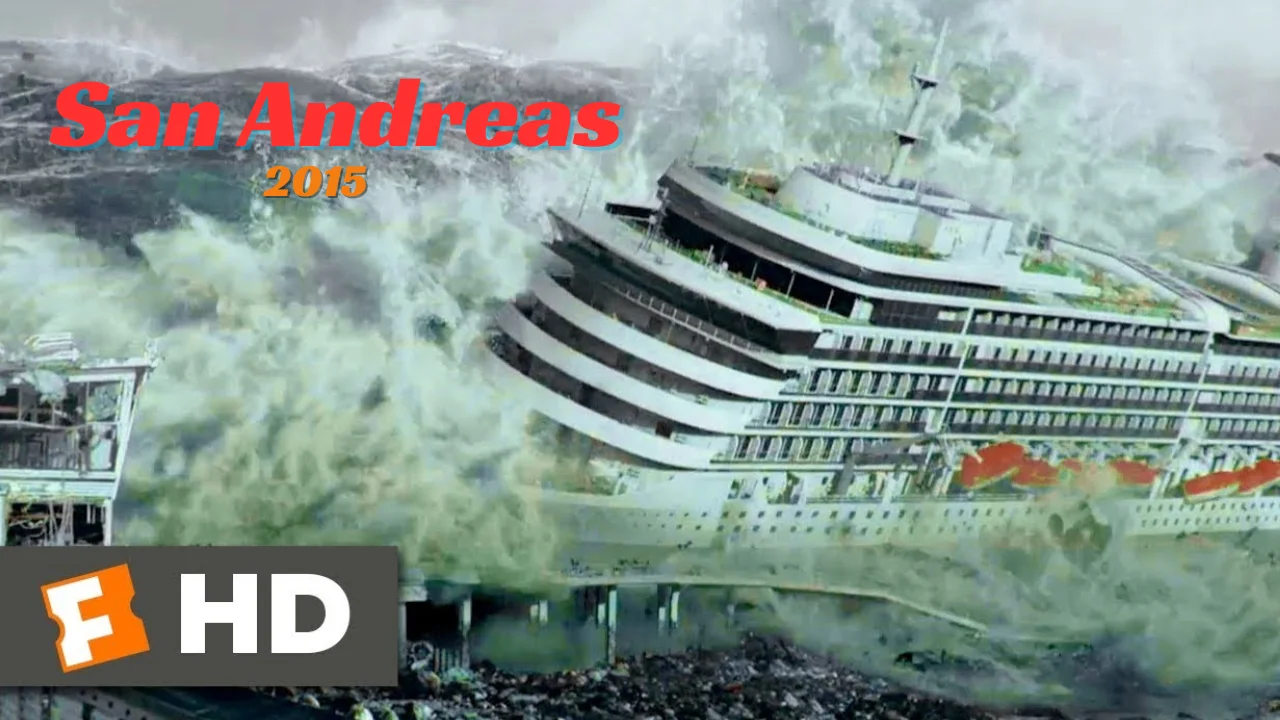
Picture this: a fault line that’s been sitting quietly under California for millions of years finally decides it’s had enough. Buildings crack apart like stale bread. The Hoover Dam crumbles. A wall of water rolls toward San Francisco like it’s trying to erase the city from the map. And somewhere in the middle of all that chaos, Dwayne “The Rock” Johnson is flying a helicopter straight into danger because his family needs him.
That’s the pitch for San Andreas, and honestly, it’s exactly the kind of premise that either makes you roll your eyes or grab the popcorn. Ten years after its release, the movie still pops up in conversations whenever people talk about disaster films, earthquake movies, or just Dwayne Johnson’s action-hero era. So let’s actually dig into what this movie is, whether it holds up, and who’s going to enjoy it most.
Quick Overview
San Andreas is a 2015 American disaster thriller directed by Brad Peyton, the same director behind Rampage, which also starred Johnson. The screenplay was written by Carlton Cuse, with story credit going to Andre Fabrizio and Jeremy Passmore.
The film was released in the United States on May 29, 2015, distributed by Warner Bros. Pictures. It runs 114 minutes and carries a PG-13 rating, which kept the violence relatively restrained despite the massive scale of destruction on screen.
Production-wise, it was backed by New Line Cinema, Village Roadshow Pictures, and RatPac-Dune Entertainment, with a reported budget of around $110 million. A chunk of the filming actually took place in Queensland, Australia, rather than California, which surprises a lot of people who assume the whole thing was shot on the West Coast.
What San Andreas Is About
The story centers on Ray Gaines, played by Johnson, a Los Angeles Fire Department rescue-helicopter pilot who’s going through a divorce. When the San Andreas Fault ruptures and triggers an enormous earthquake, Ray sets off on a dangerous journey to reach his daughter, teaming up along the way with his estranged wife.
Without spoiling too much, the film follows the family as they move from the wreckage of Los Angeles up toward San Francisco, encountering aftershocks, collapsing infrastructure, and eventually a devastating tsunami. It’s less about mystery or twists and more about survival, tension, and watching a family try to find each other while the ground literally opens up beneath them.
If you’re the type who wants a plot full of surprises, this isn’t that. The story is straightforward by design. The tension comes from the disaster itself, not from unpredictable storytelling.
Cast and Characters
The film leans heavily on its cast to carry the emotional weight, since the earthquake sequences do most of the heavy lifting on the action side.
- Dwayne Johnson as Ray Gaines, the rescue pilot at the center of the story
- Carla Gugino as Emma, Ray’s estranged wife
- Alexandra Daddario as Blake, their daughter
- Ioan Gruffudd as Daniel, Emma’s new partner
- Paul Giamatti as a seismologist trying to warn the public about the coming disaster
- Archie Panjabi in a supporting role
Paul Giamatti’s character in particular gives the movie a bit of scientific grounding, acting as the audience’s window into what’s actually happening geologically, even if the science itself gets stretched for dramatic effect.
How Accurate Is the Science in San Andreas?
This is probably the question most people search for after watching the movie, and it’s a fair one.
The short answer: not very accurate, and the filmmakers have more or less admitted as much. The production reportedly consulted Thomas Jordan, a USC seismology professor and director of the Southern California Earthquake Center, during the writing process. According to reporting on the film, Jordan later noted that while he offered advice, much of it wasn’t followed, pointing out specifically that a magnitude 9 earthquake is bigger than what the San Andreas Fault could realistically produce, and that the fault isn’t capable of generating a large tsunami the way the film depicts.
So if you’re watching for a documentary-level breakdown of what would actually happen during a major California earthquake, this isn’t it. The film takes real geological concepts and cranks them up to blockbuster levels for spectacle rather than accuracy.
That said, most viewers already know going in that this is a popcorn disaster movie, not an educational film, so the scientific liberties tend to bother critics more than casual audiences.
What Works Well in San Andreas
The biggest strength here is the sheer scale of the destruction sequences. The visual effects team put real effort into making the collapsing buildings, cracking highways, and tsunami waves feel massive and immersive. For a disaster movie, that’s the entire job, and it delivers.
Johnson also brings a steady, grounded presence to a role that could have easily become a generic action hero cliché. He plays Ray as someone motivated by protecting his family rather than as an invincible superhero, which helps the emotional beats land better than they might in a lesser film.
The pacing keeps things moving too. Once the earthquake hits, the movie rarely slows down for long stretches, which works well for a film built around tension and momentum rather than deep characterization.
What Could Have Been Better
Character development is where the film shows its weakest side. Beyond Ray and his immediate family, most of the supporting cast doesn’t get much room to feel like real people. A few characters exist mainly to move the plot forward or create brief moments of danger before disappearing from the story.
The dialogue can also lean into disaster-movie clichés, with characters stating the obvious during high-stress moments or delivering lines that feel more functional than natural. If you’ve seen other films in this genre, some of the beats will feel familiar rather than fresh.
And of course, the scientific inaccuracies mentioned earlier bothered a portion of critics and viewers who wanted the disaster elements to feel more grounded in reality.
Box Office and Reception
Despite a mixed critical response, San Andreas performed well commercially, grossing roughly $474 to 475 million worldwide against its $110 million budget. That kind of return made it a clear box office success and reinforced Dwayne Johnson’s standing as a bankable lead in big-budget action films during that era.
Critics were split, generally praising the visual effects and the chemistry between Johnson and Gugino, while criticizing the thin plotting and underwritten supporting characters. It’s the kind of reception you’d expect for a movie that prioritizes spectacle over substance, which is a trade-off plenty of disaster films make.
Who Should Watch San Andreas
This movie is built for a specific kind of viewer, and knowing that going in helps set the right expectations.
You’ll probably enjoy it if:
- You like large-scale disaster movies with heavy visual effects
- You’re a fan of Dwayne Johnson’s action-hero roles
- You want a straightforward, high-stakes survival story
- You don’t mind suspending disbelief on scientific accuracy
You might want to skip it if:
- You’re looking for a character-driven drama with deep dialogue
- Scientific accuracy in disaster scenarios is important to your enjoyment
- You prefer slower-paced, twist-heavy storytelling
Frequently Asked Questions
Is San Andreas based on a true story?
No. The earthquake and events depicted are fictional. The film uses the real San Andreas Fault as its inspiration but exaggerates the scale and consequences for dramatic effect.
Who directed San Andreas?
The film was directed by Brad Peyton, who also directed Dwayne Johnson in Rampage a few years later.
How long is San Andreas?
The film has a runtime of 114 minutes.
Is San Andreas scientifically accurate?
Not really. Experts consulted during production noted that a magnitude 9 earthquake is larger than what the San Andreas Fault could actually produce, and that the fault isn’t capable of generating the kind of massive tsunami shown in the film.
Was San Andreas a box office success?
Yes. It grossed close to $474 to 475 million worldwide, well above its production budget, making it a commercial hit despite mixed critical reviews.
Where was San Andreas filmed?
A significant portion of filming took place in Queensland, Australia, along with additional locations in the United States.
Final Thoughts
San Andreas isn’t trying to reinvent the disaster genre, and it doesn’t pretend to be a scientifically rigorous depiction of a California mega-quake. What it does offer is a solid, visually impressive survival story anchored by a likable lead performance from Dwayne Johnson. If you go in wanting spectacle, tension, and a family-first survival narrative, it delivers exactly that. If you’re hoping for tight character writing or geological realism, you’ll probably notice the cracks pretty quickly.