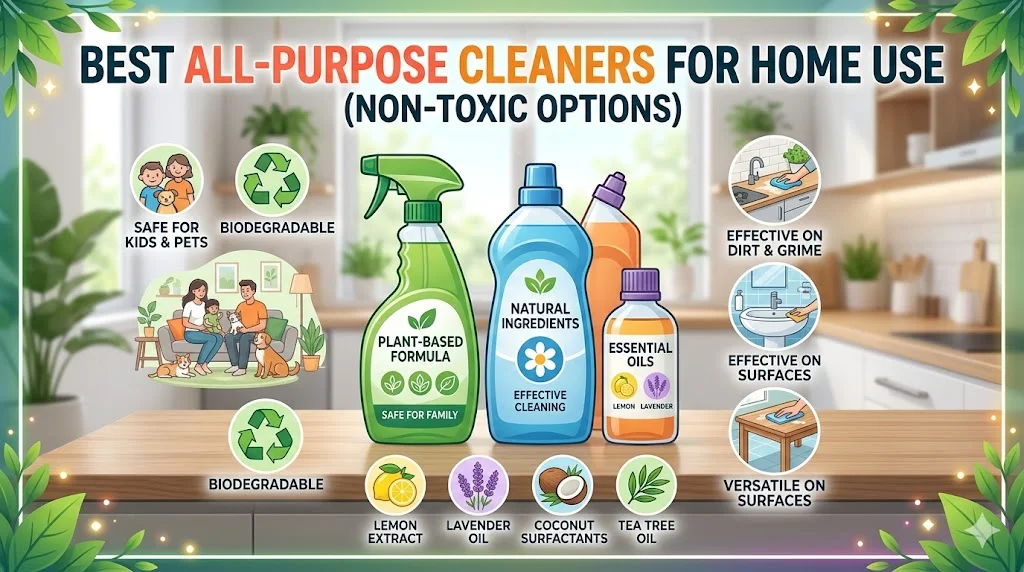
Best All-Purpose Cleaners for Home Use (Non-Toxic Options)
The Day I Finally Threw Out Everything Under My Sink
A couple of years ago, I was cleaning my bathroom with one of those big-name spray cleaners — you know the ones with the bright orange label — and I walked out with burning eyes and a headache that lasted the rest of the afternoon. My toddler had wandered in right after me, and I genuinely panicked. That was the moment I decided to actually look into what I was spraying all over the surfaces my family touched every single day.
What I found was kind of alarming, honestly. A lot of conventional cleaners contain chemicals like ammonia, chlorine bleach, synthetic fragrances, and surfactants that have been linked to respiratory irritation, hormone disruption, and worse. Nobody puts that on the label in bold letters.
So I went down a rabbit hole — reading ingredient lists, testing products, making my own mixes, ruining a few things along the way — and came out the other side with a solid understanding of what actually works without making your lungs hate you. This article is everything I wish I had known from the start.
What “Non-Toxic” Actually Means (And What It Doesn’t)
Before we get into specific products, let me be clear about something: the word “non-toxic” is not regulated in the U.S. Any company can slap it on a label without proving a thing. That drove me crazy when I first started switching over.
What you actually want to look for is transparency. Brands that list every single ingredient. Certifications like EPA Safer Choice, MADE SAFE, or EWG Verified are genuinely meaningful because third parties do the vetting.
You also want to look for things the product does NOT contain: no phthalates, no triclosan, no sodium lauryl sulfate in high concentrations, no artificial dyes, no chlorine bleach, and ideally no synthetic fragrance (listed as “fragrance” on labels, which can hide hundreds of undisclosed chemicals).
Once I understood that, shopping got a lot easier.
The All-Purpose Cleaners I Actually Tested
1. Branch Basics Concentrate
This one changed everything for me. Branch Basics is a plant-based concentrate that you dilute yourself using their reusable spray bottles. One bottle of concentrate makes multiple bottles of cleaner, which means less plastic waste too.
I used it on my kitchen counters, stovetop, bathroom sink, and even diluted it further to mop my tile floors. It handled everyday grease and grime without any issue. The scent is almost nothing — very faint and clean-smelling — which was a relief after years of overpowering chemical smells.
The only learning curve is getting the dilution ratios right. They give you a chart, and it’s simple enough once you do it a few times. Mess up the ratio and it either doesn’t clean well or gets a little sudsy. I ruined one mopping session early on by making it too concentrated — left streaks everywhere. After that, I followed the chart religiously.
Best for: Families with young kids or pets, people with chemical sensitivities, anyone wanting to reduce plastic waste.
2. Dr. Bronner’s Sal Suds
People tend to associate Dr. Bronner’s with their famous castile soap, but the Sal Suds is actually their more powerful cleaner, and it’s what I reach for when something needs real scrubbing power.
It’s a highly concentrated biodegradable cleaner with plant-derived surfactants. A small amount goes a long way — like, embarrassingly small. The first time I used it, I squeezed in way too much and created a foam situation in my kitchen sink that took a while to sort out.
Diluted properly, it cuts through grease on the stovetop and handles bathroom grime confidently. It has a faint pine scent from natural essential oils, which I personally find refreshing rather than overpowering.
One thing to know: don’t mix it with vinegar. The acid neutralizes the soap and makes both of them less effective. I learned that the hard way after reading a cleaning “hack” online that turned out to be nonsense.
Best for: Kitchen grease, tough bathroom buildup, general household surfaces.
3. Seventh Generation Multi-Surface Cleaner
If you’re just starting your switch to non-toxic cleaners and want something easy to grab off a regular grocery store shelf, Seventh Generation is a great entry point. It’s widely available, affordable, and EPA Safer Choice certified.
I kept a bottle of this under my sink for about a year before I got more serious about concentrates. It’s not as powerful as Branch Basics or Sal Suds for tough jobs, but for daily wiping down of counters, tables, and appliance surfaces, it does the job without drama.
The fragrance-free version is my pick. Some of their scented versions use essential oils, which are fine for most people, but if you have respiratory sensitivities, fragrance-free is always the safer bet.
Best for: Beginners, light daily cleaning, quick countertop wipe-downs.
4. Aunt Fannie’s FlyPunch and CleanAF Multi-Surface
I stumbled onto Aunt Fannie’s when looking specifically for food-safe cleaners. Their CleanAF spray is made with fermented vinegar and plant-based ingredients, and it carries NSF certification for use on food-contact surfaces. That matters if you’re wiping down a cutting board, a high chair tray, or your refrigerator shelves.
It smells mildly of vinegar, which fades quickly. Performance on everyday messes is solid. I wouldn’t reach for it on a really greasy stovetop, but for the fridge, counters, and dining table, it’s one of my most-used products.
Best for: Food prep surfaces, refrigerator interiors, high chairs, anything that needs to be genuinely food-safe.
5. Good Home Co. All-Purpose Cleaner
This is a newer one I tried based on a recommendation, and I’ve been impressed. Good Home Co. focuses heavily on ingredient transparency and uses sugar-derived surfactants. The formula is simple, biodegradable, and it actually cleans bathroom surfaces better than I expected from something that smells like gentle herbs.
It’s a ready-to-use spray, so no diluting required. Slightly more expensive per bottle than concentrates, but the convenience factor is real when you’re in a hurry.
My Actual Cleaning Routine Using These Products
Morning counter wipe-down: Branch Basics all-purpose dilution, quick spray and wipe with a reusable microfiber cloth. Takes two minutes.
Weekly bathroom cleaning: Sal Suds diluted in a spray bottle (about 1 tablespoon per quart of water) for the sink and toilet exterior. For the toilet bowl, I use a separate baking soda and Sal Suds paste. Scrub, let sit for five minutes, flush.
Kitchen stovetop and greasy surfaces: Sal Suds, slightly more concentrated, with a damp sponge and a little elbow grease. For stubborn baked-on spots, a sprinkle of baking soda first, then the cleaner on top.
Floors: Branch Basics floor dilution in a bucket, mop with a microfiber flat mop. Rinse mop well between sessions or it starts to smell.
Fridge and food surfaces: Aunt Fannie’s CleanAF spray, wipe down and done. No rinsing needed since it’s food-safe.
Mistakes I Made (So You Don’t Have To)
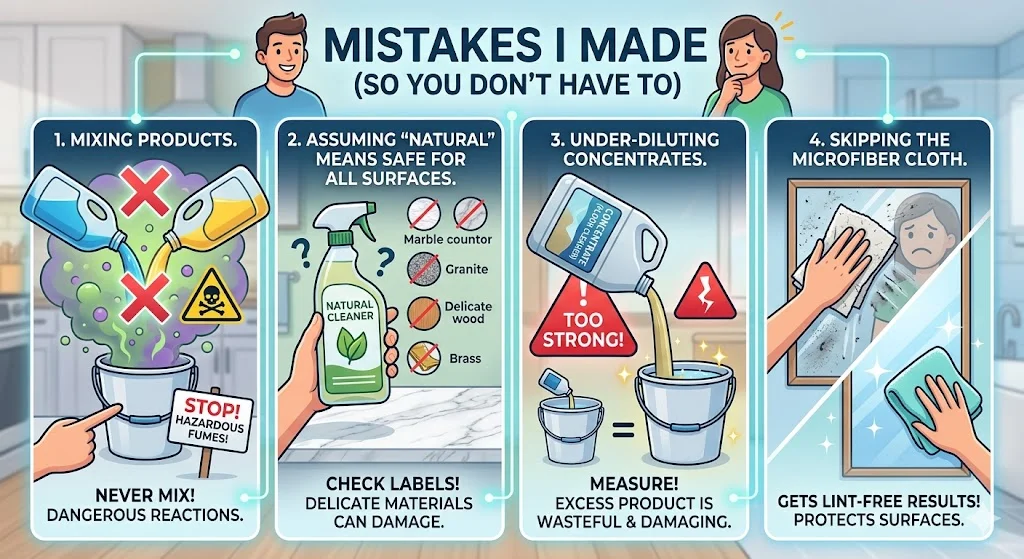
Mistake 1: Mixing products. I once sprayed a vinegar-based cleaner and then followed up with a castile-based cleaner on the same surface, thinking more was better. It created a cloudy, streaky film that took real effort to remove. Always use one product at a time, and if switching, wipe the surface clean and dry first.
Mistake 2: Assuming “natural” means safe for all surfaces. Vinegar-based cleaners are acidic. That means they can damage natural stone surfaces like marble and granite over time. I used a vinegar cleaner on my neighbor’s marble counters (I was helping her clean) and noticed the surface looked slightly dull afterward. Always check what your surface can handle.
Mistake 3: Under-diluting concentrates. More concentrate does not mean cleaner. It usually means streaky residue, wasted product, and sometimes a surface that feels sticky. Follow the dilution instructions exactly.
Mistake 4: Skipping the microfiber cloth. Switching to non-toxic cleaners without switching your cleaning cloths is a missed opportunity. Paper towels push dirt around. A good microfiber cloth actually traps particles and works with your cleaner instead of against it. I buy mine in bulk from Amazon or a cleaning supply store, and I wash them in hot water without fabric softener (which destroys the microfibers over time).
A Note on DIY Cleaners
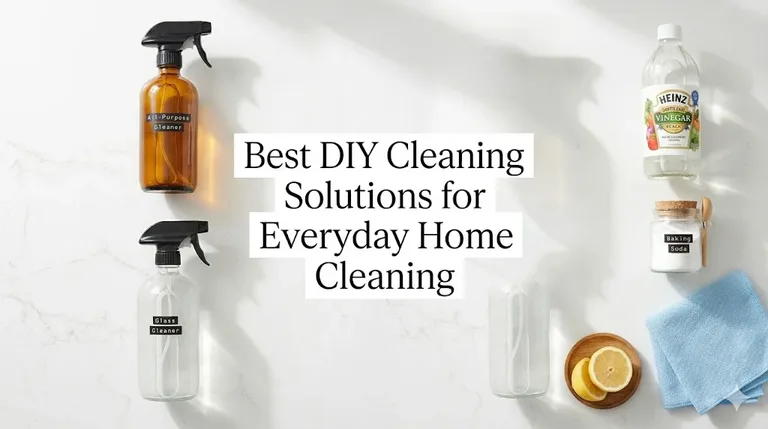
Yes, you can make your own. The classic combo is water, white distilled vinegar, and a few drops of essential oil. It smells nice and it works for light cleaning. I still use it sometimes for windows and mirrors.
But I want to be honest: for anything greasy, for bathrooms, for real disinfecting — commercial non-toxic products tend to outperform DIY mixes. The plant-based surfactants in something like Sal Suds or Branch Basics are engineered to break down grime in ways that straight vinegar simply isn’t.
If your budget is tight, DIY is a perfectly reasonable starting point. If you want reliable performance across the whole house, the products I mentioned above are worth the investment.
Finding These Products
Most of these are available on Amazon, through the brands’ own websites, or at stores like Whole Foods, Target (they’ve expanded their clean cleaning aisle significantly), and Thrive Market if you want to save a bit on regular reorders. Branch Basics ships directly and runs bundle deals that make the starter kit much more affordable.
Final Thoughts
Switching to non-toxic all-purpose cleaners is not about being perfect or spending a fortune. It’s about making small, informed swaps that add up to a genuinely healthier home environment — especially if you have kids, pets, or anyone with respiratory issues in your house.
Start with one product. Replace one conventional cleaner with a plant-based alternative and see how it goes. For most people, the performance is not a downgrade — it’s actually an upgrade, because you stop tolerating headaches and ventilation issues as a normal part of cleaning.
That afternoon with the burning eyes was a small moment, but it pushed me toward a habit change that I’m genuinely grateful for now. Your home should feel better after you clean it, not worse.