How to Keep Plants Alive During Summer Heat
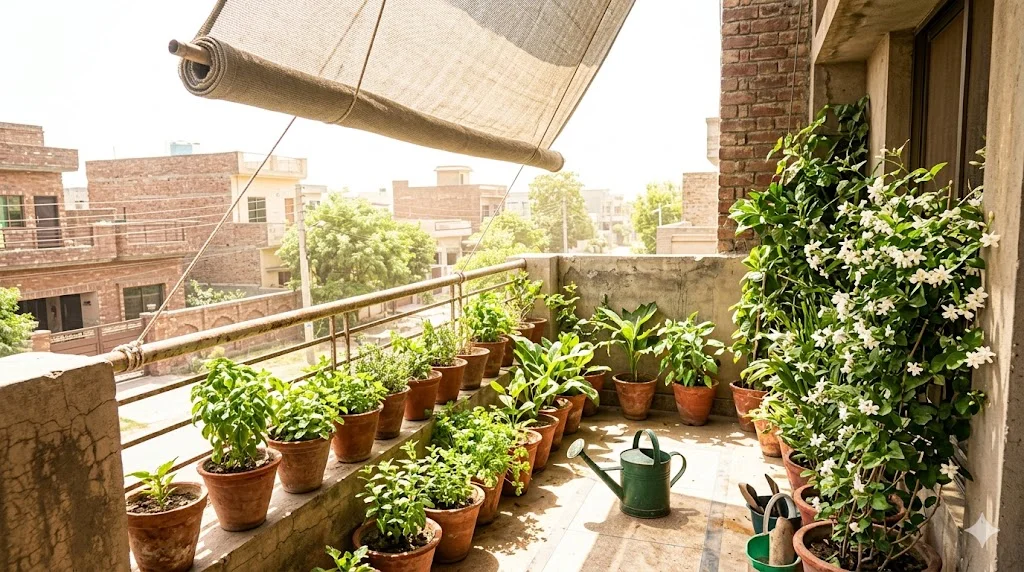
I almost killed my entire balcony garden last July.
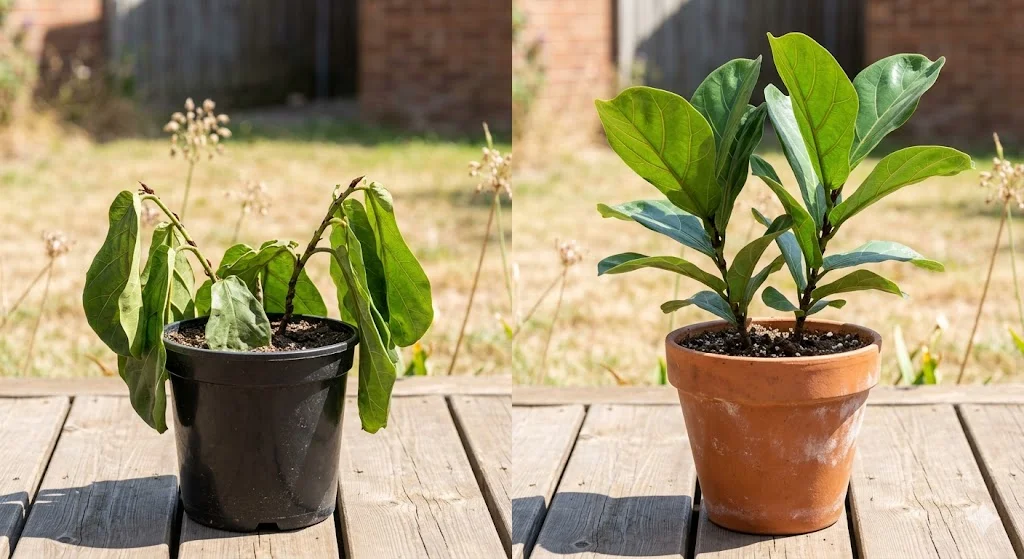
It was one of those weeks where the temperature refused to drop below 40°C, the sun was relentless from morning to evening, and by Thursday, three of my favorite plants were drooping like they had completely given up on life. My jasmine looked burnt. My mint was crispy at the edges. And my beloved fiddle leaf fig — the one I had kept alive for two whole years — was dropping leaves like it had somewhere better to be.
That was the summer I actually learned how to take care of plants in heat, not just guess my way through it.
If you are going through the same thing right now, I want to save you the panic and the plant casualties. Because most of the time, it is not too late — you just need to make a few adjustments before the heat does more damage.
Why Summer Heat Hits Plants Harder Than You Think
Most people assume plants love sunshine. And yes, they do — but there is a big difference between warm sunlight and brutal heat. When temperatures spike, a few things happen all at once that stress your plants out.
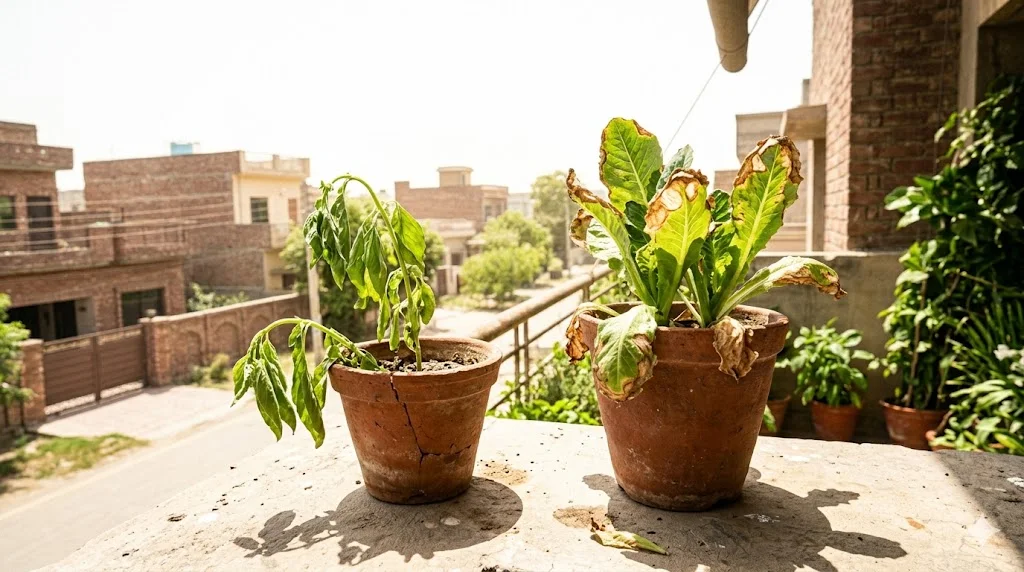
First, the soil dries out faster than the roots can absorb water. Second, the leaves lose moisture through a process called transpiration at a much higher rate. Third, direct hot sunlight can actually scorch the leaves, especially on plants that are used to filtered light indoors or on partially shaded balconies.
The result is a plant that looks wilted, sunburned, or just completely checked out.
I used to think wilting meant the plant needed more water immediately. Sometimes that is true. But I learned the hard way that sometimes the roots are actually rotting from overwatering in hot weather — and wilting can be a symptom of both too much and too little water. It is one of those frustrating gardening contradictions that nobody tells you about upfront.
Watering the Right Way in Hot Weather
Let me be honest — I used to water my plants whenever they looked sad. That was my entire strategy. It did not work.
Here is what actually helps:
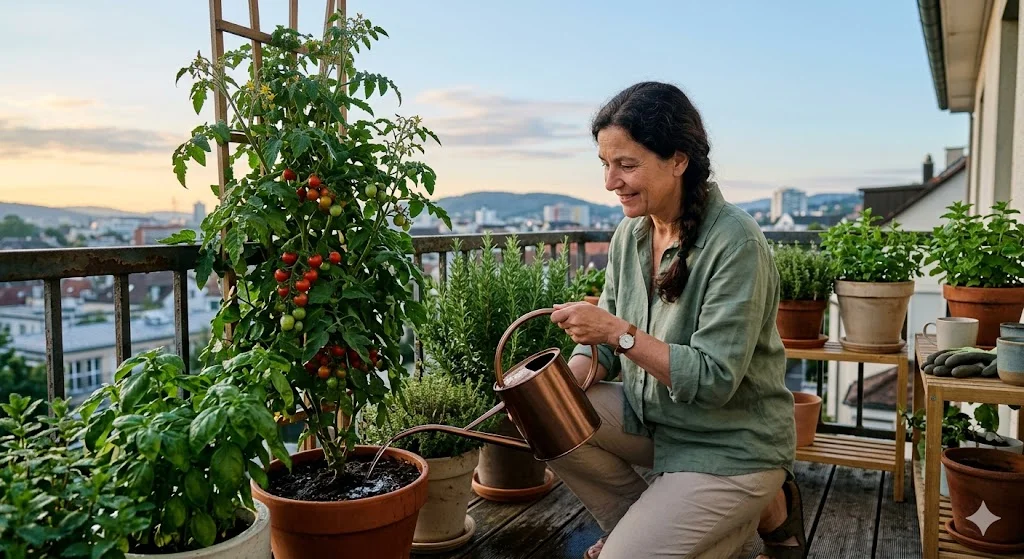
Water in the early morning. This is probably the single most useful thing you can do. When you water in the morning, the soil gets a chance to absorb moisture before the heat of the day kicks in. Evening watering can work too, but it sometimes leads to fungal issues because the water sits on leaves overnight. Midday watering? Mostly wasteful — it evaporates too quickly and can sometimes cause leaf burn when water droplets act like tiny magnifying glasses in direct sun.
Water deeply, not frequently. A light daily splash does not actually help much. What your plants need is a deep soak that reaches the roots, followed by a day or two of letting the top layer dry out slightly. This encourages roots to grow downward where it is cooler and more consistently moist. I switched to this approach and my tomatoes went from struggling to thriving.
Check the soil before you water. Stick your finger about two inches into the soil. If it still feels damp, hold off. If it is dry, go ahead. I also started using a simple soil moisture meter — you can find them for a few hundred rupees on Daraz or any garden store. It took all the guesswork out of my watering routine.
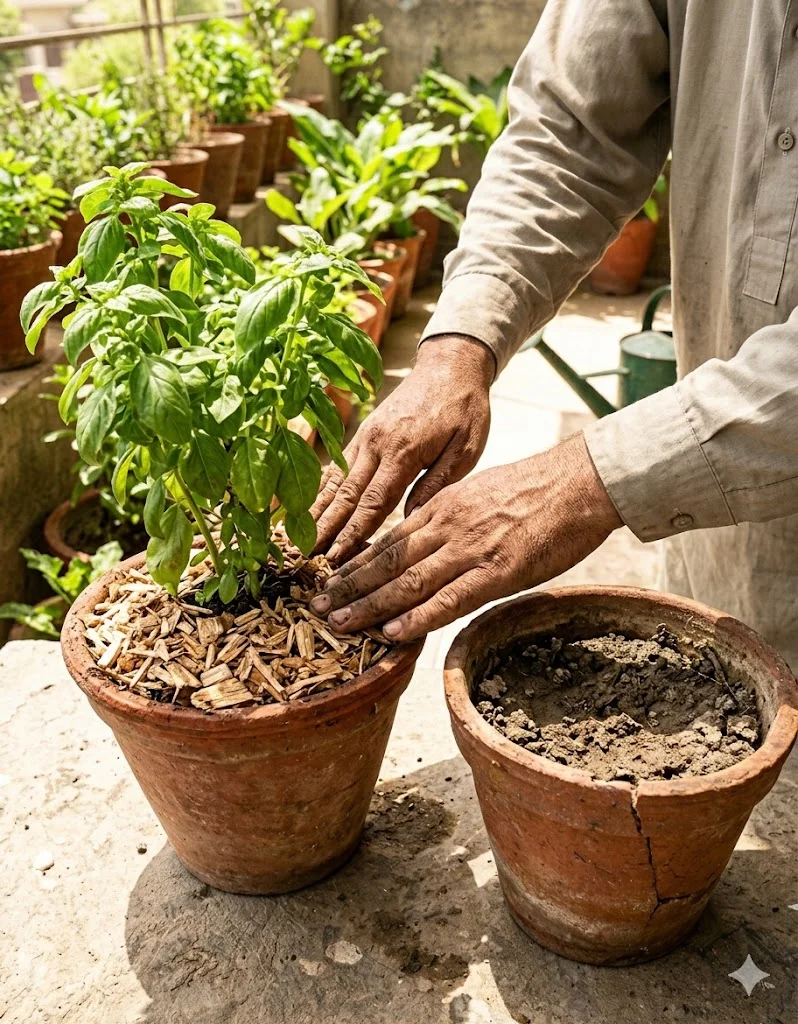
Mulch is your best friend. Covering the top layer of soil with mulch — dried leaves, wood chips, even torn newspaper in a pinch — slows down evaporation dramatically. I started doing this after losing a pot of basil to heat and now I do it for every outdoor pot when summer starts.
Moving and Shading Your Plants Strategically
Not every plant can survive full sun during a Pakistani or South Asian summer, even if the plant tag says “full sun.” Those ratings are often made for milder climates.
During peak heat hours — roughly 11 AM to 4 PM — move sensitive plants to shade. For potted plants, this is easy. For ground plants, you can use a simple shade cloth. These are inexpensive, available at most nurseries, and can cut the direct sun intensity by 30 to 50 percent without blocking light entirely.
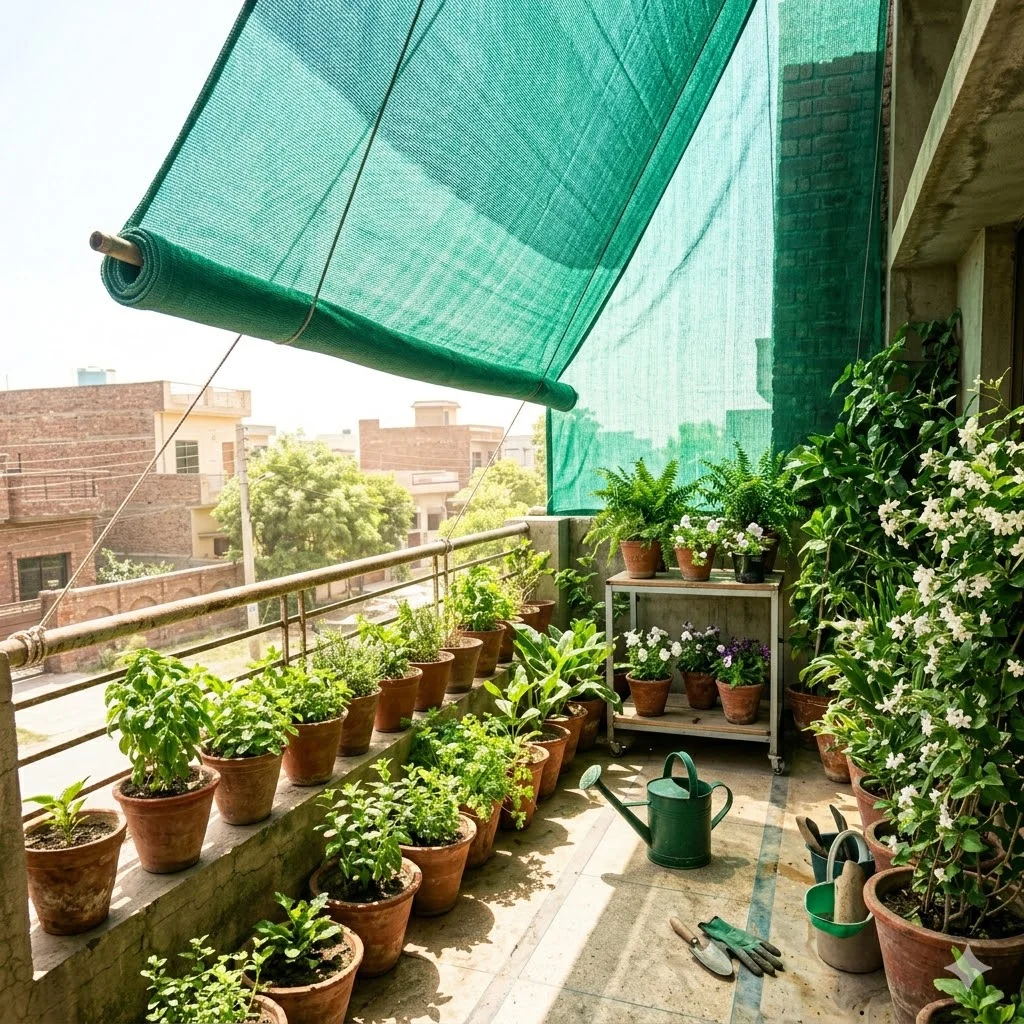
I have a small rolling plant stand that I bought specifically so I could wheel my more delicate plants under a covered part of the balcony during the afternoon. It sounds like extra effort but after losing plants, it became a non-negotiable part of my summer routine.
Know which plants can handle full summer sun and which cannot. Cacti, succulents, most herbs like rosemary and thyme — they are generally fine. But ferns, peace lilies, pothos, and a lot of flowering plants like impatiens will struggle badly in direct afternoon sun above 38°C.
The Mistakes I Made (So You Do Not Have To)
I want to be upfront about this because gardening blogs often only talk about what works, not the things that backfire spectacularly.
Mistake one: Repotting during a heatwave. I thought moving a struggling plant to a bigger pot with fresh soil would help it. It actually made things worse. Repotting stresses a plant even under normal conditions. Doing it during extreme heat is like asking someone to run a marathon the day after a fever. Wait until temperatures cool down before repotting.
Mistake two: Fertilizing stressed plants. When my plants looked bad, I thought giving them more nutrients would help. Wrong. Fertilizer pushes growth, and a stressed plant cannot handle that demand. I actually burned a few roots this way. Hold off on fertilizing during heat stress and resume once temperatures drop.
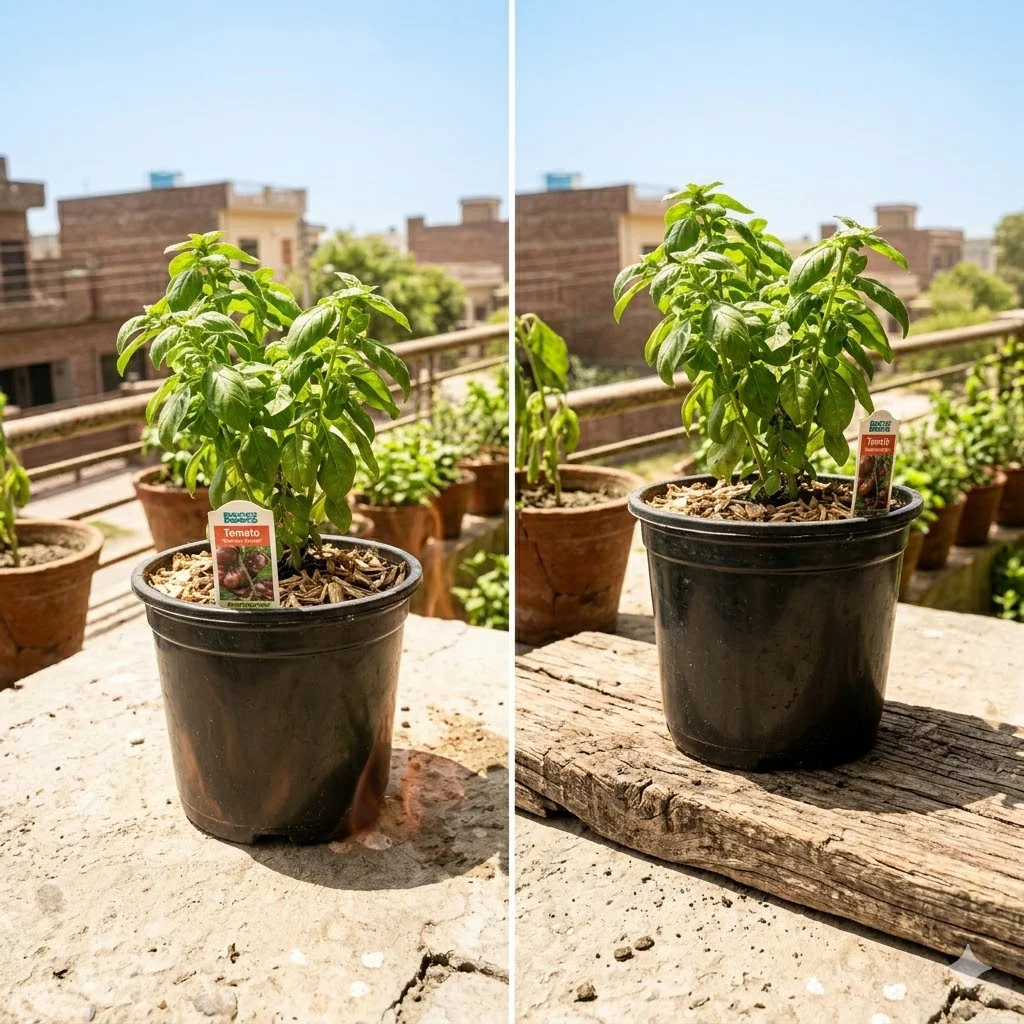
Mistake three: Ignoring pots on concrete. If your pots are sitting directly on a concrete floor or a metal balcony surface, the heat radiating up from below is cooking the roots. I started placing pots on wooden boards, old bricks, or thick foam mats to create insulation between the pot and the hot surface. It made a noticeable difference.
Mistake four: Using dark pots in full sun. Black or dark-colored pots absorb significantly more heat than terracotta or light-colored ones. I switched several of my smaller plants into terracotta pots for summer and they handled the heat much better.
Indoor Plants and Summer Heat
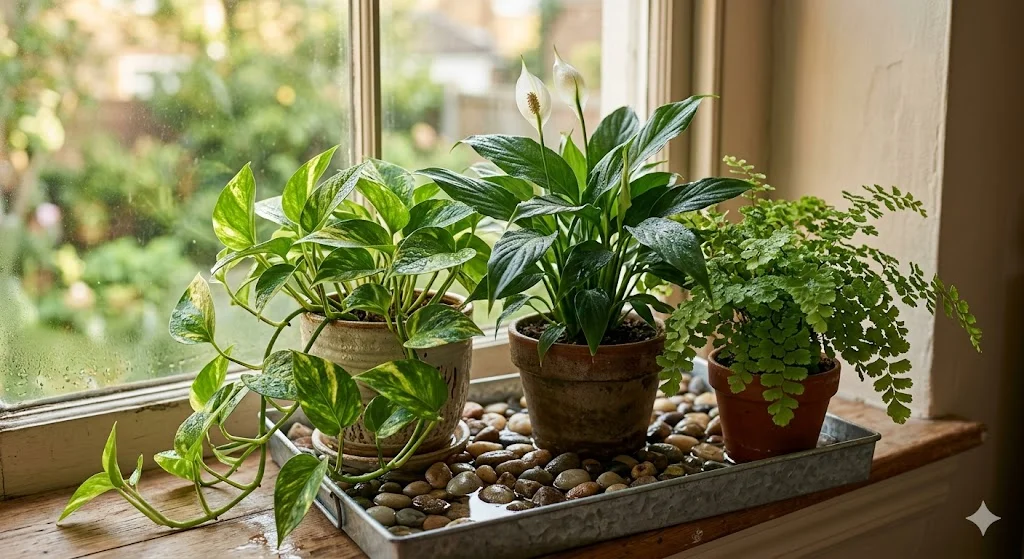
Do not think your indoor plants are safe just because they are inside. If your home gets warm and you use fans or ACs that create dry air, your houseplants can suffer too.
Group your indoor plants together. Plants release moisture through their leaves, and grouping them creates a slightly more humid microclimate around them. This is a simple trick that genuinely works.
Keep plants away from AC vents. Cold, dry air blasting directly on a plant is almost as bad as hot, dry air. The sudden temperature changes and low humidity will stress most houseplants.
If you have a particularly dry home in summer, a small humidifier near your plant shelf can help — or even just placing pots on a tray filled with pebbles and water. As the water evaporates, it creates humidity right around the plants.
How to Revive a Plant That Has Already Suffered
If your plant is already heat-stressed — leaves yellowing, wilting, or crispy edges — do not give up immediately.
Move it to shade first. Then water it thoroughly but carefully — make sure the pot has drainage so water does not pool at the roots. Trim off any completely dead or badly scorched leaves. This reduces the demand on a struggling plant and lets it focus energy on new growth.
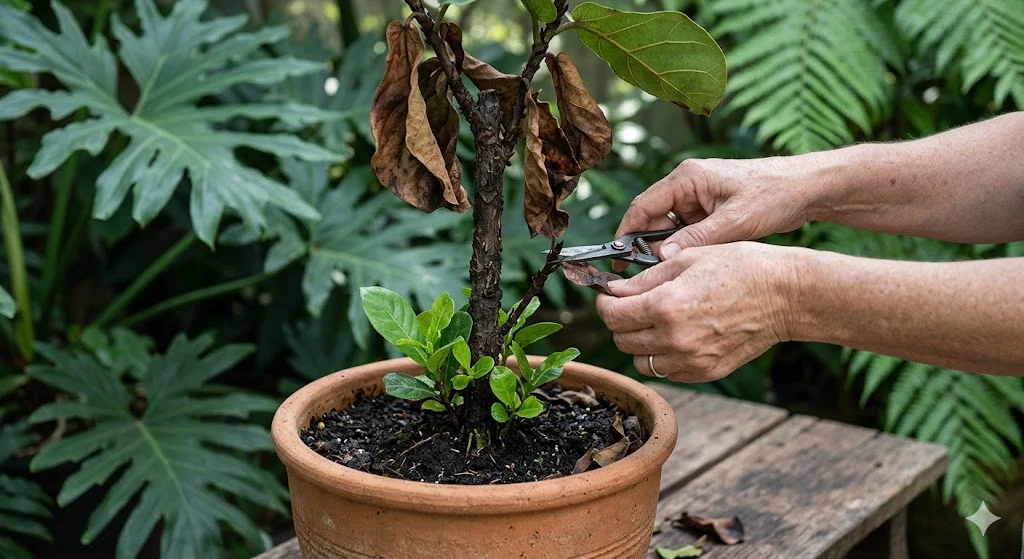
Give it about a week of consistent care — proper shade, regular but measured watering, and no fertilizer — before deciding it is too far gone. You will often be surprised.
I saved a nearly dead begonia this way last summer. Six weeks later it was blooming again.
A Few Tools That Actually Help
I am not someone who loves buying a lot of gadgets, but a few things have genuinely made summer plant care easier for me.
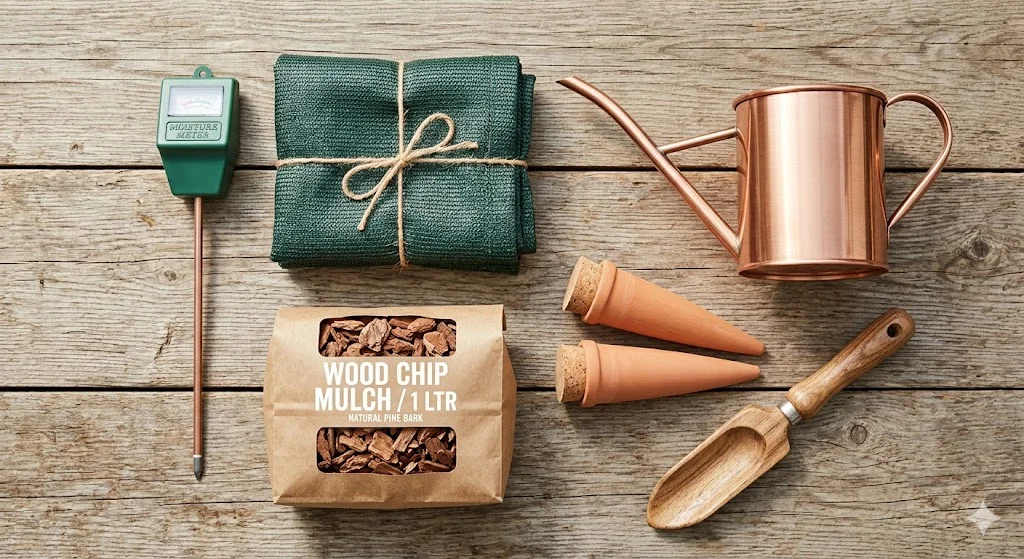
A soil moisture meter removes the guessing from watering. A shade cloth (look for 40% to 50% shade rating) protects outdoor plants during peak heat. A basic watering can with a long spout lets you water at the base of the plant without splashing water on leaves in the sun. And if you travel or forget to water regularly, self-watering spikes — those clay or plastic terracotta stakes you fill with water — are surprisingly effective for keeping soil moisture consistent.
There are also apps like Planta or Greg that remind you when to water based on your plant type and local weather. I used Greg for a while and it is genuinely helpful, especially when your routine gets disrupted in summer.
Final Words
Summer is hard on plants, but it does not have to be fatal. Once you understand what the heat is actually doing — drying out soil fast, stressing roots, scorching leaves — you can make small changes that protect your garden through even the hottest months. The biggest shift for me was moving from reactive watering (watering only when something looked bad) to consistent, preventive care.
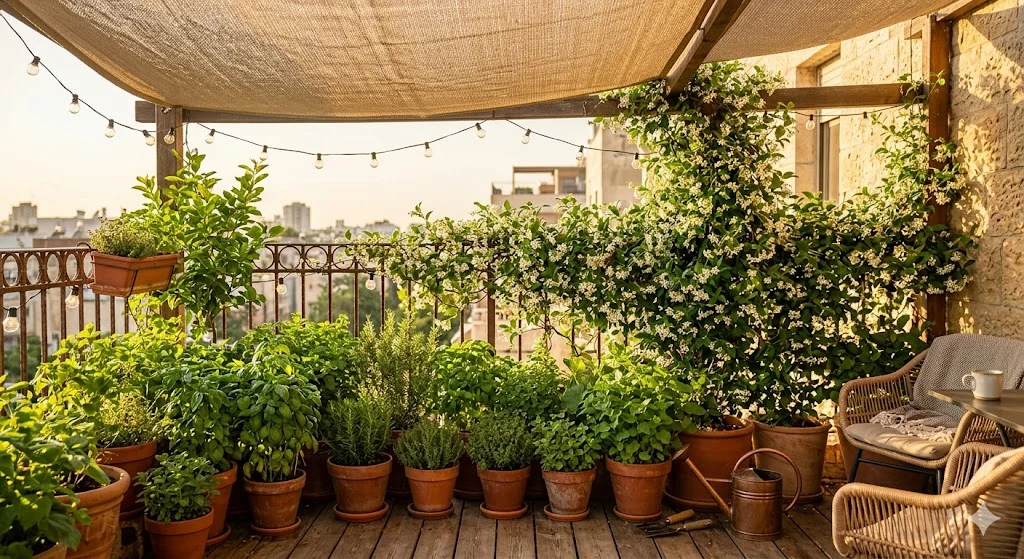
Start with watering times, add some mulch, get your shade situation sorted, and your plants will make it through the summer in much better shape than mine did that first brutal July.