How to Clean Burnt Pots Easily (Methods That Actually Work)

I still remember the first time I completely destroyed a pot. I was making caramel — totally distracted by a phone call — and came back to a thick black layer fused to the bottom of my favorite stainless steel saucepan. I tried scrubbing it with a regular sponge for about 20 minutes and got nowhere. Then I used a steel wool pad and scratched the whole interior. That pot never looked the same again.
If you’ve ever done something similar, you already know the frustration. The burnt residue feels like it’s been welded on. Normal dish soap doesn’t touch it. And the longer you leave it, the worse it gets.
Over the years I’ve burnt more pots than I’d like to admit — rice gone wrong, forgotten soups, overheated sauces. Through all of that, I’ve actually figured out what works and what’s a complete waste of time. Let me walk you through it.
Why Burnt Pots Happen (And Why They’re So Hard to Clean)
Before jumping into solutions, it helps to understand what you’re actually dealing with. When food burns onto a pot, it goes through a chemical change. The proteins, sugars, and starches essentially carbonize and bond to the metal surface. That’s why just soaking it in water for five minutes and scrubbing doesn’t do the job — you’re not breaking down that bond, you’re just pushing wet burnt stuff around.
The type of pot also matters a lot. Stainless steel, cast iron, non-stick, and ceramic all need slightly different approaches. What works beautifully on stainless can ruin a non-stick coating completely. I learned that lesson the hard way with a bottle of Bar Keepers Friend and a ceramic pan. More on that later.
What You’ll Need Before You Start
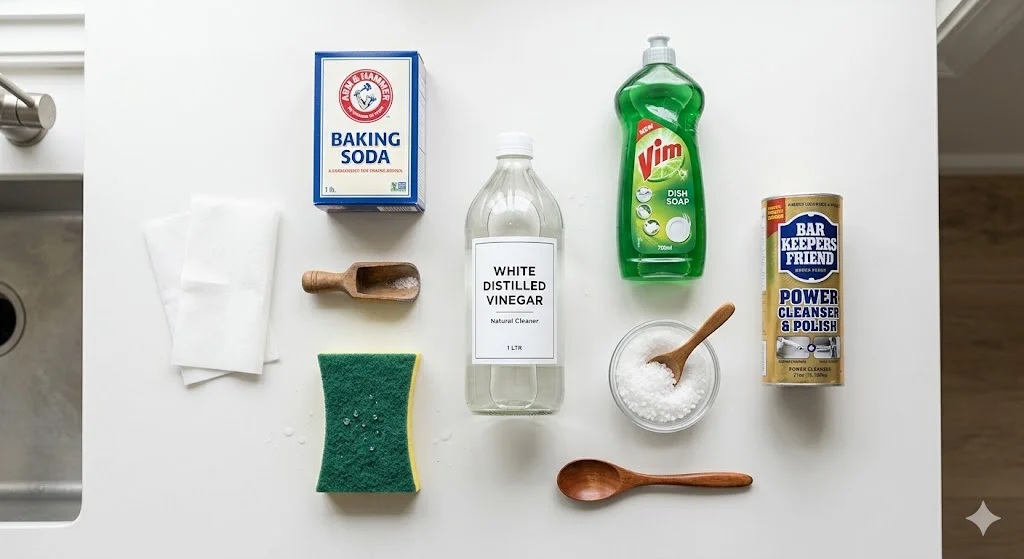
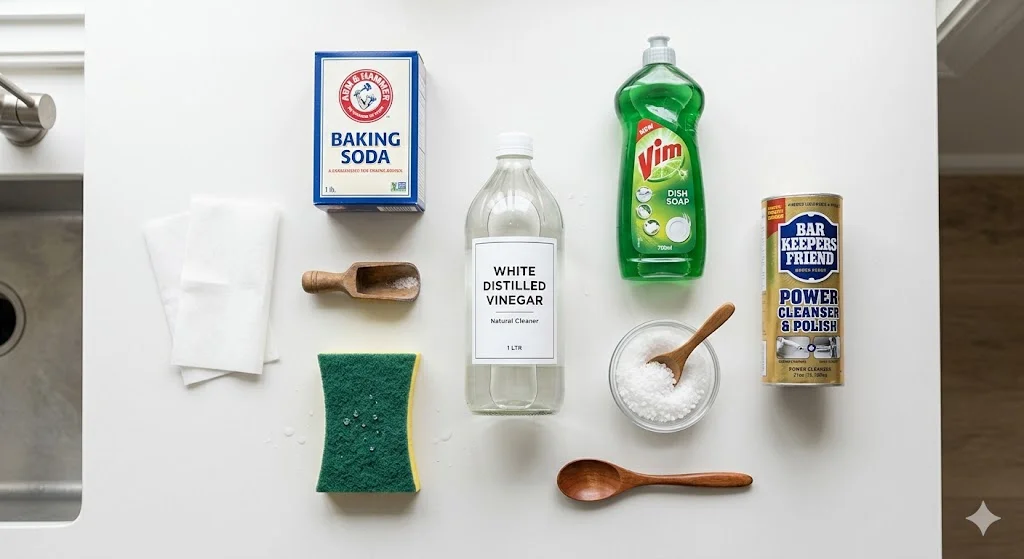
You don’t need fancy products for most burnt pot situations. Here’s what I usually reach for:
Dish soap — the regular kind, nothing special
Baking soda — this is your best friend for burnt pots
White vinegar — pairs perfectly with baking soda for tough stains
Salt — coarse salt works as a gentle abrasive
A wooden spoon or silicone spatula — for scraping without scratching
A non-scratch scrubbing pad — the green Scotch-Brite pads work fine for stainless, but avoid them on non-stick
Bar Keepers Friend — specifically for stainless steel and enameled pots
Dryer sheets — yes, really. I’ll explain.
Method 1: The Boiling Water Trick (Your First Move)
This is always where I start, and it handles about 60% of burnt pot situations.
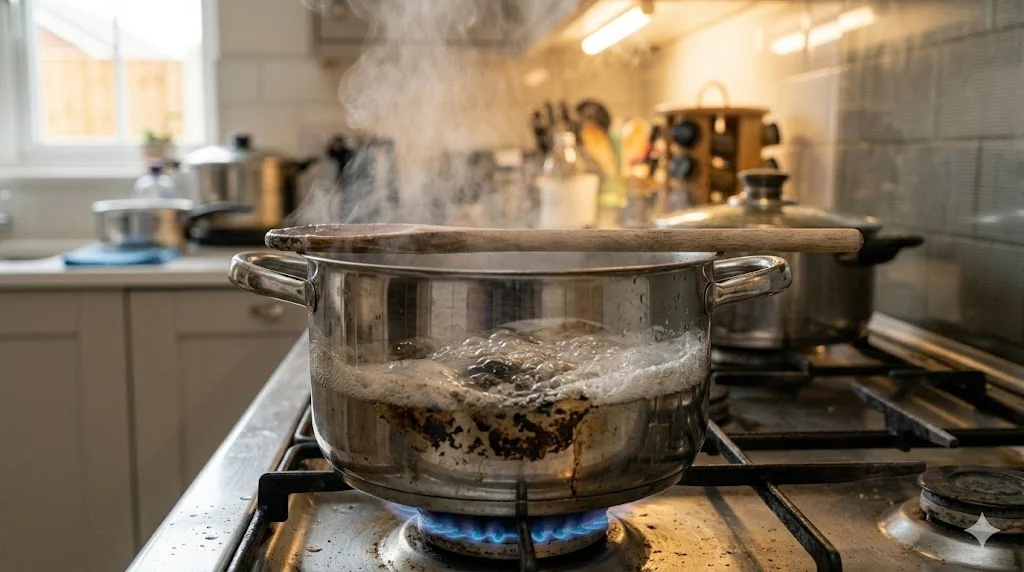
Fill the pot with enough water to cover the burnt area. Add a generous squirt of dish soap — maybe two tablespoons. Place it on the stove and bring it to a boil. Let it boil for about 10 to 15 minutes.
What this does is rehydrate and loosen the carbonized layer from the inside out. Once it cools down enough to handle safely, take a wooden spoon or spatula and gently scrape the bottom. A lot of the burnt bits will lift right off.
For a lightly burnt pot — like rice that stuck and scorched slightly — this is usually all you need. Follow up with a normal wash and you’re done.
Tip: Don’t pour cold water into a hot pot. Let it cool slightly first or use warm water. Sudden temperature changes can warp thin pots and even crack ceramic ones.
Method 2: Baking Soda and Vinegar (The Classic That Actually Delivers)
This is my go-to method for moderate to heavy burns. I’ve used it on pots that looked completely unsalvageable and gotten them clean.
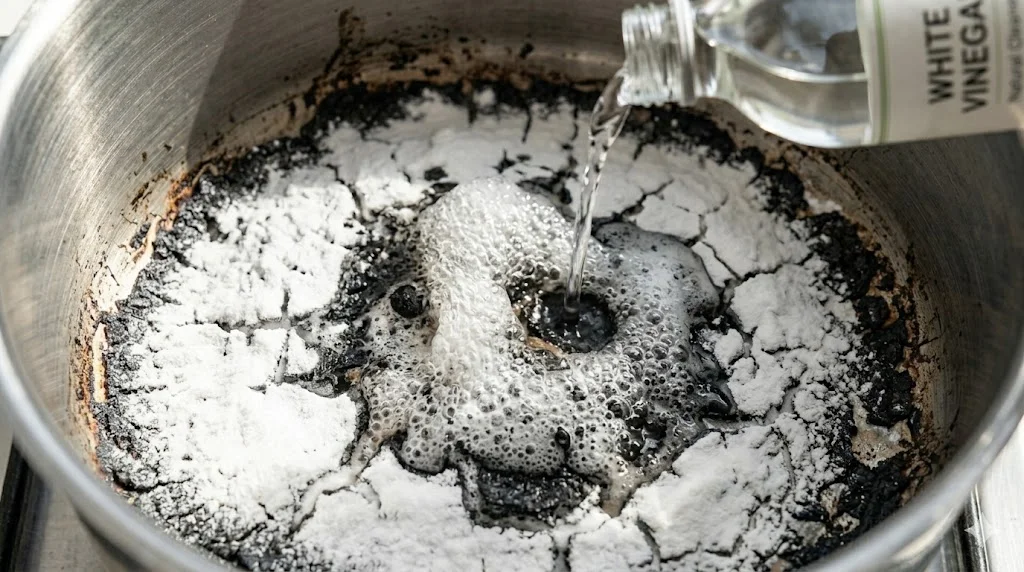
Pour out whatever water is left and sprinkle a generous layer of baking soda over the burnt area — don’t be shy with it. Then pour white vinegar over the baking soda. It’ll fizz up immediately. That reaction is actually doing something useful: it’s creating carbonic acid, which helps break down the burnt residue.
Let it sit and fizz for about 15 to 30 minutes. Don’t scrub it yet. Just let it work.
After that, add a little water, bring it to a gentle simmer on the stove for about 10 minutes, then let it cool. Now scrub with a non-scratch pad. You’ll be genuinely surprised at how much comes off.
I’ve done this on a pot that had a thick black layer from burnt tomato sauce — the kind where you think the pot is done for — and it came clean in two rounds of this method.
Method 3: Baking Soda Paste (For Stubborn Spots)
Sometimes the burn is in one concentrated area — a hot spot at the center of the pot. In those cases, I skip the liquid method and make a paste.
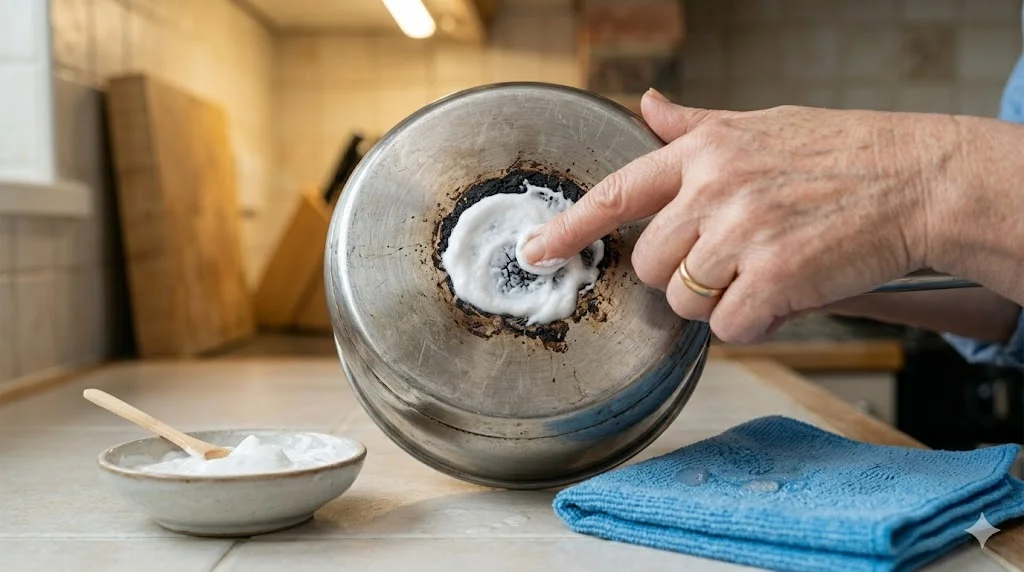
Mix baking soda with just enough water to form a thick paste. Apply it directly to the burnt spot and press it down firmly. Let it sit for at least an hour. Overnight is even better if you have the patience.
Then scrub in circular motions using a non-scratch pad. The mild abrasiveness of the baking soda combined with the sitting time usually breaks through even really stubborn spots.
This method is safe for stainless steel, enameled cast iron, and ceramic pots.
Method 4: Bar Keepers Friend (For Stainless Steel Specifically)
If you have a stainless steel pot and the baking soda methods aren’t fully doing the job, Bar Keepers Friend is worth having in your cleaning cabinet. It’s a powder cleaner that contains oxalic acid, which is specifically good at removing discoloration and burnt residue from stainless.
Wet the pot, sprinkle some Bar Keepers Friend on the burnt area, and let it sit for just a minute or two. Then scrub with a non-scratch pad.
Important warning: Do not use Bar Keepers Friend on non-stick pans or uncoated aluminum. It will damage the surface. Stainless and enamel only.
Method 5: The Dryer Sheet Hack (Strange But Real)
I was skeptical the first time someone told me about this. But I was dealing with a really stubborn burnt pot and decided to try it.
Fill the pot with warm water and drop in one or two used dryer sheets. Let it soak overnight — or at least 4 to 6 hours. The softening agents in the dryer sheet loosen the burnt food from the surface.
The next morning, remove the dryer sheets and scrub with a regular sponge. The burnt residue comes off much more easily than it would without the soak.
I’ve used this specifically on stainless steel and it worked surprisingly well. It’s not my first choice, but when I’m dealing with something that’s been sitting burnt for a day and I don’t want to do multiple boiling rounds, this soak-and-wait method is genuinely useful.
Cleaning Burnt Cast Iron: A Completely Different Game
Cast iron needs its own section because the rules are almost entirely different. You cannot soak cast iron in water or use acidic solutions like vinegar — it’ll strip the seasoning and cause rust.
For a burnt cast iron pan, the best approach is coarse salt and a paper towel or dry cloth. Pour a generous amount of coarse salt into the pan and scrub with a folded paper towel. The salt acts as an abrasive and lifts the burnt residue without damaging the seasoning.
If the burn is really bad, you can add a tiny bit of cooking oil to the salt to make a scrubbing paste. Scrub, dump the salt, rinse quickly with warm water (not hot, not prolonged), dry immediately on the stove over low heat, and apply a thin layer of oil to re-season.
Never leave cast iron wet. That’s the cardinal rule.
Mistakes I’ve Made That You Should Avoid
Using steel wool on non-stick pans. It scratches through the coating instantly and those pans are never the same. Stick to soft sponges or silicone scrubbers on non-stick.
Pouring cold water into a hot pan immediately. I’ve warped a thin stainless saucepan doing this. Always let the pot cool a bit before adding water.
Leaving a burnt pot soaking for days thinking it’ll fix itself. It doesn’t. The burn sets harder and becomes even more difficult to clean. Tackle it within a day.
Using bleach on burnt pots. It doesn’t help with carbonized food residue at all, and on some metals it causes damage or discoloration. This is a kitchen problem, not a disinfecting problem.
Scrubbing too aggressively on the first attempt. I’ve wasted a lot of energy doing this. Let your soaking solution do the work first — that’s the whole point.
When a Pot Is Actually Beyond Saving
Sometimes a pot is genuinely done. If the non-stick coating is visibly peeling, scratched through, or has developed a rough texture that doesn’t clean up — it’s time to let it go. Cooking on a damaged non-stick surface isn’t safe, and no amount of cleaning fixes that.
For stainless and cast iron, the bar is much higher. I’ve rescued pots that looked like they’d been through a disaster. As long as the structure is intact — no warping, no cracks — those materials are usually salvageable with enough patience and the right method.
Final Thoughts
Cleaning a burnt pot doesn’t have to be a battle. The real trick is matching your method to the type of burn and the material of the pot, and then being patient enough to let the solution work before you start scrubbing.
Baking soda is the workhorse that handles most situations. Vinegar adds power when you need it. Bar Keepers Friend is your specialty tool for stainless steel. And if you’ve completely forgotten about a pot on the stove and come back to a disaster — don’t panic. Boil water with soap first, evaluate, and go from there.
Your pot has a better chance of surviving than you think.